 Haramain Companion
Common mistakes in ʿUmra and how to avoid them
Most mistakes in ʿUmra happen out of well meant caution or in the crowds: putting on Iḥrām only in Jeddah, cutting through the Ḥijr Ismāʿīl during Ṭawāf, Raml in all seven circuits, pushing right up to the Maqām, running the whole Saʿy. For each station you will find the mistake, the correct way and the source, together with the rank of the station, because the rank decides what consequence a mistake has.
Last updated: November 2026
Why the rank decides the consequence
Not every mistake weighs the same. The app assigns each station one of three ranks:
- Rukn: pillar
- Without it, the ʿUmra is not complete. It cannot be replaced by an offering; it must be made up.
- Wājib: obligation
- If it is left out, a compensation (Dam) becomes due.
- Sunnah: recommended
- Voluntary and rewarded. Whoever leaves out a Sunnah misses out on its reward and merit.
The four schools differ on which act has which rank. According to al-Mawsūʿa al-Fiqhiyya:
- Mālikīs and Ḥanbalīs
- Three pillars: Iḥrām, Ṭawāf and Saʿy. For the Saʿy, the Ḥanbalīs also have a narration from Imām Aḥmad according to which it is Wājib; Ibn Qudāma considers it preferable.
- Shāfiʿīs
- Four pillars: Iḥrām, Ṭawāf, Saʿy and, in addition, the Ḥalq.
- Ḥanafīs
- Iḥrām is a condition (Sharṭ); the only pillar is the Ṭawāf. The Saʿy is Wājib.
al-Mawsūʿa al-Fiqhiyya, entry "ʿUmra", §§ 12, 23, 37
Mistakes in Iḥrām and at the Mīqāt
Rukn according to the majority. Entering Iḥrām from the Mīqāt and avoiding the prohibitions of Iḥrām are obligatory in ʿUmra. More on this on the pages Mīqāt and Prohibitions in Iḥrām.
al-Mawsūʿa al-Fiqhiyya, entry "ʿUmra", §§ 12 and 14
-
Flying over the Mīqāt on the plane
Mistake: Putting off Iḥrām until the plane has landed in Jeddah. This goes against the command of the Prophet ﷺ.
Correct: Perform ghusl at home or at the airport, put perfume on the body and put on the Iḥrām garments. Shortly before flying over the Mīqāt, make the Niyya and the Talbiya. Better a little early than too late: the plane is fast. Ask the crew when the Mīqāt will be passed.
Consequence: Whoever has landed in Jeddah without Iḥrām travels back to the Mīqāt if possible. Otherwise, Iḥrām in Jeddah and a Fidya: a sheep in Makkah, all of it to the poor, eating none of it yourself.
Source: Ibn ʿUthaymīn, Manāsik al-Ḥajj wa-l-ʿUmra, p. 113
-
Planning the preparation wrongly
Mistake: Waiting with the ghusl and the garments until you are level with the Mīqāt.
Correct: On a flight, be prepared when you board. By land, stop at the Mīqāt and enter Iḥrām there. Iḥrām is obligatory for everyone who crosses the Mīqāt boundary with the intention of Ḥajj or ʿUmra, whether by land, sea or air.
Source: Ibn ʿUthaymīn, Manāsik al-Ḥajj wa-l-ʿUmra, p. 112
Mistakes in Ṭawāf
Rukn The Ṭawāf is a pillar of ʿUmra. Its obligatory part, according to the majority, is seven circuits; the Ḥanafīs say four are Farḍ and the remaining three Wājib.
al-Mawsūʿa al-Fiqhiyya, entry "ʿUmra", § 22
-
Cutting through the Ḥijr Ismāʿīl
Mistake: Walking through the semicircular Ḥijr with its low wall when it is crowded. This is a serious mistake: most of the Ḥijr is part of the Kaʿba, and whoever walks through it does not go around it. According to the majority, that circuit does not count.
Correct: Always walk around the outside of the Ḥijr. When it is crowded, use the upper level or come at night, but never take the shortcut.
Source: Ibn ʿUthaymīn, Manāsik, p. 116; evidence: the Prophet's ﷺ statement to ʿĀʾisha that the Ḥijr is part of the House
-
Starting before the Black Stone
Mistake: Starting the Ṭawāf already between the Rukn al-Yamānī and the Black Stone, "to be on the safe side". This is exaggeration (Ghuluww).
Correct: Start exactly at the line of the Black Stone. True caution means following the Sharīʿa.
Source: Ibn ʿUthaymīn, Manāsik, p. 116; Qurʾān 49:1
-
Raml in all seven circuits
Mistake: Walking briskly with short steps the whole time.
Correct: Raml only in the first three circuits of the Ṭawāf of ʿUmra (or of the arrival Ṭawāf), and only for men. Walk normally in the last four circuits. Women do not do Raml. If it is too crowded, simply walk, with no Fidya.
Source: Ibn ʿUthaymīn, Manāsik, p. 116; Muslim, from Jābir
-
Pushing towards the Black Stone
Mistake: Shoving and arguing in order to kiss the Stone. This destroys humility (Khushūʿ) and harms others.
Correct: Kiss it if that is easy. Otherwise touch it with your hand and kiss your hand. Otherwise point to it with your hand from a distance and say the Takbīr, and do not kiss your hand then.
Source: Ibn ʿUthaymīn, Manāsik, p. 116; Qurʾān 2:197
-
Treating the Stone as a source of blessing, touching all the corners
Mistake: After touching it, wiping your hand over your body or your children. Or touching all four corners and the walls of the Kaʿba.
Correct: The Stone neither benefits nor harms; only Allah does. Only the Black Stone (touch and kiss) and the Rukn al-Yamānī (touch only, do not kiss) are touched.
Source: Ibn ʿUthaymīn, Manāsik, p. 117; Buḫārī and Muslim, statement of ʿUmar; Aḥmad, Ibn ʿAbbās to Muʿāwiya
-
A fixed duʿāʾ for each circuit and loud group prayer
Mistake: Reading a specific duʿāʾ for each circuit from a booklet, or repeating loudly after a leader in a group and so disturbing others.
Correct: There is no fixed duʿāʾ for each circuit. At the Stone, the Takbīr; between the Rukn al-Yamānī and the Stone, "Rabbanā ātinā fi d-dunyā ḥasanatan …"; otherwise your own words, quietly. More on the page Duʿāʾ of ʿUmra.
Source: Ibn ʿUthaymīn, Manāsik, p. 119 to 120; Qurʾān 2:201 and 7:55; Muwaṭṭaʾ
Mistakes in the prayer at Maqām Ibrāhīm
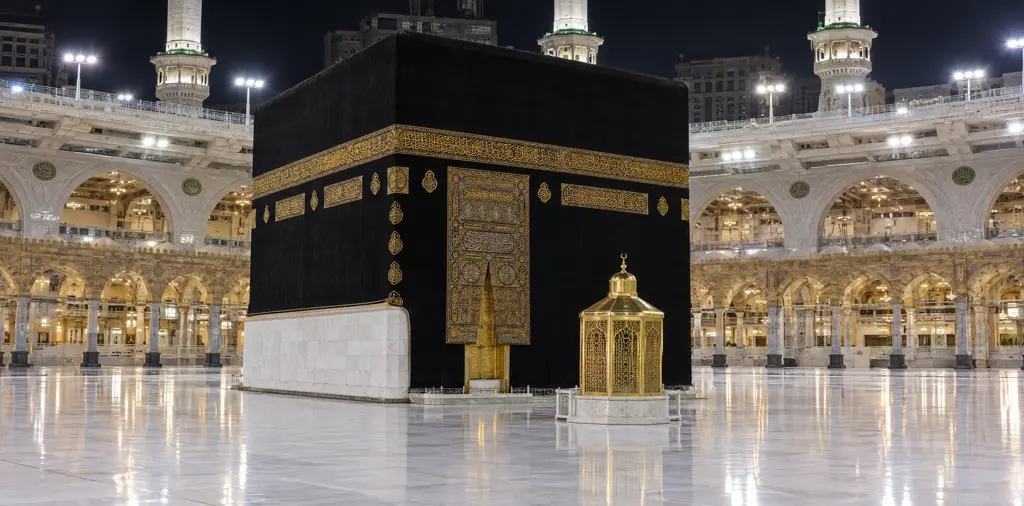
After the Ṭawāf, you pray the two rakʿas of Ṭawāf.
al-Mawsūʿa al-Fiqhiyya, entry "ʿUmra", § 10
-
Insisting on praying right at the Maqām
Mistake: Believing the two rakʿas must be right at the Maqām. This leads to crowding and obstructs other people's Ṭawāf.
Correct: The two rakʿas can be prayed anywhere in the mosque. Ideally the Maqām is between you and the Kaʿba, but not extremely close.
Source: Ibn ʿUthaymīn, Manāsik, p. 122; Qurʾān 2:125
-
Continuing to pray at the Maqām afterwards
Mistake: Adding further voluntary prayers directly behind the Maqām without reason.
Correct: After the two rakʿas, make room. Further prayers further back or on another level. The Prophet ﷺ prayed two rakʿas and left.
Source: Ibn ʿUthaymīn, Manāsik, p. 123
In the app: The Ṭawāf and Saʿy counter counts along circuit by circuit, the Ḥaram map shows the routes, and each step comes with the comparison of the four schools. Works offline. Play Store · App Store · Web app
Mistakes in the Saʿy between Ṣafā and Marwa
Rukn for the Mālikīs and Shāfiʿīs, Wājib for the Ḥanafīs. For the Ḥanbalīs it is a pillar according to the relied upon view, and Wājib according to another narration, which Ibn Qudāma prefers. The obligatory part, according to the majority, is seven passes; according to the Ḥanafīs, four.
al-Mawsūʿa al-Fiqhiyya, entry "ʿUmra", § 23
-
Starting at Marwa
Mistake: Reversing the order.
Correct: The Saʿy begins at Ṣafā and leads to Marwa. Iḥrām and Ṭawāf must come before it.
Consequence: If you start at Marwa, your first pass is invalid; counting begins from Ṣafā.
Source: al-Mawsūʿa al-Fiqhiyya, entry "ʿUmra", § 23
-
Running the whole distance
Mistake: Running all the way from Ṣafā to Marwa.
Correct: As a man, move briskly only between the green markers, where Hājar once ran. Walk normally for the rest.
Source: Ibn ʿUthaymīn, Manāsik, p. 125; Muslim, from Jābir
-
Women running like men
Mistake: Running between the green markers as a woman.
Correct: In Saʿy, women walk normally, including between the green markers, with duʿāʾ and dhikr. More on the page ʿUmra for women (German).
Source: Ibn ʿUthaymīn, Manāsik, p. 125; statement of Ibn ʿUmar
-
Takbīr as in prayer, and the verse at every ascent
Mistake: Raising and lowering the hands on Ṣafā and Marwa as if for prayer. Or reciting the verse "Inna ṣ-Ṣafā wa-l-Marwata min shaʿāʾiri llāh" at every ascent.
Correct: Turn towards the Qibla, raise your hands for duʿāʾ, make dhikr and your own duʿāʾ, all of it three times. The verse only the first time, on Ṣafā.
Source: Ibn ʿUthaymīn, Manāsik, p. 124 to 125; Qurʾān 2:158; Muslim, from Jābir
Mistakes in Ḥalq or Taqṣīr
Wājib according to the majority; for the Shāfiʿīs, the Ḥalq is a pillar of ʿUmra. After the Saʿy, the pilgrim shaves the head (Ḥalq) or shortens the hair (Taqṣīr).
al-Mawsūʿa al-Fiqhiyya, entry "ʿUmra", §§ 12 and 36
-
Leaving out shaving or shortening
Mistake: Taking off Iḥrām without Ḥalq or Taqṣīr.
Consequence: Whoever leaves out this Wājib commits a sin according to the majority, and a blood sacrifice (Dam) becomes due. If you forgot it, you make it up as soon as you remember; whether something additional is then due is judged differently by the schools.
Source: al-Mawsūʿa al-Fiqhiyya, entry "ʿUmra", § 36
-
Women shaving the head
Mistake: Shaving the head as a woman.
Correct: Women do not shave; they only shorten the hair, by about the length of a fingertip. For them, Ḥalq is makrūh according to the majority, and according to some scholars even forbidden.
Source: al-Mawsūʿa al-Fiqhiyya, entry "ʿUmra"
-
Shaving everything off as a Mutamattiʿ
Note: For someone who will still perform Ḥajj after the ʿUmra, shortening is better. That way hair remains to be removed during Ḥajj. More on the page Ḥajj step by step (German).
Source: al-Mawsūʿa al-Fiqhiyya, entry "ʿUmra"
Where the schools differ. The ranks on this page follow the presentation in al-Mawsūʿa al-Fiqhiyya. If you want to know exactly what applies in your school, you will find the comparison of the four madhāhib in the app at every step. The whole sequence is shown in ʿUmra step by step.
Frequently asked questions
- What is the most common mistake in Ṭawāf?
- A serious mistake is cutting through the Ḥijr Ismāʿīl when it is crowded. Most of the Ḥijr is part of the Kaʿba; whoever walks through it does not go fully around it. According to the majority, that circuit does not count. Always walk around the outside of the Ḥijr, even when it is full.
- Do I have to pray the two rakʿas directly behind Maqām Ibrāhīm?
- No. The two rakʿas after the Ṭawāf can be prayed anywhere in the mosque. Ideally the Maqām is between you and the Kaʿba, but not in the crowd directly in front of it.
- Do women run between the green markers during Saʿy?
- No. In Saʿy, women walk normally, including between the green markers. Ibn ʿUmar said that there is no Raml for women, neither at the House nor between Ṣafā and Marwa.
- What happens if I start the Saʿy at Marwa?
- Then that first pass is invalid. Counting only begins from Ṣafā. The Saʿy begins at Ṣafā and leads to Marwa.
- What applies if I leave out Ḥalq or Taqṣīr?
- According to the majority of scholars, shaving or shortening is a Wājib. Whoever leaves it out commits a sin, and a blood sacrifice (Dam) becomes due. The Shāfiʿīs, by contrast, count the Ḥalq among the pillars of ʿUmra. If you forgot it, you make it up as soon as you remember.
- What should I do if I landed in Jeddah without Iḥrām?
- If possible, travel back to the Mīqāt and enter Iḥrām there. If that is not possible, enter Iḥrām in Jeddah and pay a Fidya: a sheep in Makkah, distributed entirely to the poor, without eating any of it yourself.
Further reading
ʿUmra step by step · Duʿāʾ of ʿUmra · Prohibitions in Iḥrām · Mīqāt · ʿUmra for women (German) · Ḥajj step by step (German) · Visiting Madīna (German)
Also in English: Umrah guide · German original: Häufige Fehler bei der ʿUmra
Avoid mistakes, step by step on your phone
Haramain Companion guides you through every station of ʿUmra, with rank, duʿāʾ and source and the comparison of the four schools. The Ṭawāf and Saʿy counter helps make sure no circuit is missing, and the Ḥaram map helps you find your way. Works offline, in 14 languages.
Get it on Google Play Download on the App Store Open in browserLast updated: November 2026. This page summarises the information in the app and does not replace a fatwa. If you are unsure, ask a scholar.